
XISTA: Where research turns into business
January 26, 2026|RW
How does a scientific discovery become a company that, in the best case scenario, has a global impact? XISTA has created an innovation ecosystem in Vienna that translates research into entrepreneurial success—with capital, expertise, and a strong network centered around the life sciences hub.
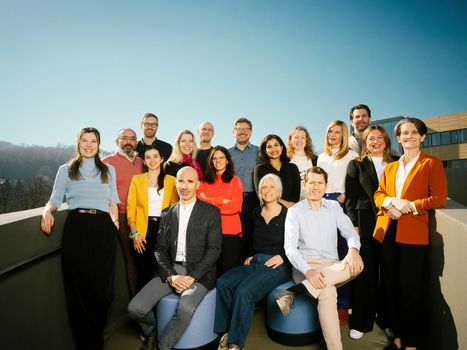
XISTA is a team of 18 innovation enthusiasts—investors, experts, and entrepreneurs—with a solid background in intellectual property, biology, chemistry, and medicine. They support founders in turning their research into successful companies. As a venture capital fund, XISTA manages around 100 million euros and invests primarily in life sciences companies. The fund is based at the Institute of Science and Technology Austria (ISTA), but deliberately works in an open and cross-institutional manner.
“We work with founders from all institutions.”
Markus Wanko
Founder & Managing Partner - XISTA
What matters in life sciences today
Life sciences are considered one of the most resilient growth industries and offer good opportunities for founders. From the perspective of Markus Wanko, CEO of XISTA, founders in this sector (and all life sciences companies) need to answer three key questions to gain clarity:
- What unmet medical need are we addressing? (What medical problem are we solving?)
- Which patient group is the focus?
- What is the development strategy?
XISTA is particularly interested in projects/startups that are based on a novel scientific approach and can answer these three questions at an early stage. This allows excellent research to give rise to a clear direction—and thus the basis for scalable growth.
Vienna in international comparison: cooperative, networked, effective
XISTA brings experience from other innovation regions: Boston, for example, is known for its extraordinary density of universities, biotech companies, and venture capital; in Doha, they work with financial institutions with considerable clout. From XISTA's perspective, Vienna stands out for another decisive factor: a vibrant, cooperative scientific landscape.
“Vienna offers a rare combination of excellent basic research, a supportive environment for public funding, and a high quality of life, which helps to attract and retain global talent.”
Markus Wanko
Founder & Managing Partner - XISTA
World-class research is being conducted at institutions such as ISTA, the Medical University of Vienna, and institutes of the Austrian Academy of Sciences such as CeMM and IMBA—and increasingly also by start-ups that translate these findings into products. Examples include Proxygen (develops active substances that specifically break down disease-related proteins), Solgate (develops novel therapeutics for previously difficult-to-access target structures), and Ribbon Bio (develops methods for producing very long synthetic DNA). This is made possible by an environment of accessible laboratory and work space, short distances between research and market—for example, at the Vienna BioCenter, ISTA, and new innovation hubs such as the XISTA Science Park—as well as a strong network of public support, investors, and mentors.
“The city offers ideal conditions for the establishment and growth of life science companies: strong academic institutions, accessible laboratory space, and a network of public support, investors, and mentors.”
Markus Wanko
Founder & Managing Partner, xista
Combined with Vienna's high quality of life, a broad international talent pool, and an increasingly global orientation, this creates an ecosystem that is small enough to be connected—but strong enough to make a difference.
Digitalization and AI as accelerators
According to XISTA, digitalization and AI are changing how solutions for healthcare are discovered, developed, and delivered. From the early stages of drug development to personalized medicine, data-driven methods are accelerating innovation cycles and improving outcomes. Vienna is well positioned in this area and recently attracted international attention with the establishment of the groundbreaking AITHYRA institute. AITHYRA, an institute of the Austrian Academy of Sciences (ÖAW), develops AI-supported research approaches that enable revolutionary advances in biomedicine. The goal is to better understand diseases, enable faster and more reliable diagnoses, and develop new therapies for incurable diseases.
Why international founders choose Vienna
For international startups in the life sciences, Vienna is a location with access to outstanding science, funding, and talent—without the hypercompetition and cost pressures of larger centers. Markus Wanko recommends establishing early contacts with local partners such as XISTA, the Medical University, or the Vienna BioCenter, and taking advantage of Austria's strong support infrastructure for early-stage innovation. Vienna welcomes international founders who bring ambition and originality to the table.

Vienna lives life sciences – the Vienna Business Agency supports
The funding landscape in Vienna has developed significantly in recent years, and the Vienna Business Agency is a key partner for science-based innovation. It supports companies, startups, and research institutions in the life sciences sector with free advice, funding programs, infrastructure, and networking—including via the LISAvienna life sciences platform.
At the same time, research institutions are increasingly open to cooperation, and technology transfer offices have become more professional and founder-friendly. There is also a growing sense of community among local investors, incubators, and accelerators, which makes it easier for founders to find the right partners.
XISTA science ventures Management GmbH