
How Vienna became the center of cognitive biology
November 26, 2025|KW
How did language, music, and human communication actually develop? Tecumseh Fitch, a US researcher, is working with his team in Vienna to understand this, and is also investigating animal communication systems.
From birdsong to speech therapy
When we speak, sing, or listen to our favorite music, very few of us think about how all this became possible in the first place. This is precisely what interests Tecumseh Fitch, cognitive biologist at the University of Vienna. Together with his team, he is researching how central aspects of human communication—language, music, and voice—have developed over the course of evolution.
His research team at the University of Vienna compares animal communication—such as birdsong—with human language and music, thus creating new links between evolutionary research, neuroscience, linguistics, and music research. They want to understand which abilities we share with other species and what makes humans unique.
Even though this is basic research, the questions are highly practical:
- Can music therapy help stroke patients regain their speech—and if so, why?
- How can we better support people with dyslexia in learning to read?
- How can the emotional well-being of animals be assessed more objectively?
For Fitch, one thing is clear: understanding how communication originated and works can also improve therapies, diagnostics, and animal welfare in the long term.

A new department for Vienna
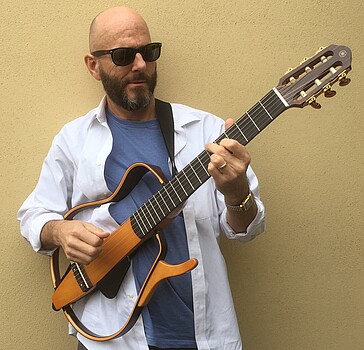
Tecumseh Fitch's journey to Vienna began 15 years ago with an invitation from colleagues to come to Vienna—his brilliance in his field ultimately led the University of Vienna to decide to create a new department dedicated to his area of research: behavioral and cognitive biology.
This made Vienna one of the few places in the world with its own department of cognitive biology. Here, biology, linguistics, psychology, music research, and computer science work closely together—an environment that perfectly suits Fitch's interdisciplinary research questions.
The combination of a large university and many specialized institutions—from university institutes to non-university research facilities—makes Vienna a very attractive location for talented individuals at all career stages in the life sciences.
Tecumseh Fitch
Deputy Head of the Department of Behavioral and Cognitive Biology at the University of Vienna
When asked how Tecumseh Fitch would describe the research landscape in Vienna, he doesn't give a long explanation, but rather a single word: “Thriving!”
The combination of:
- top researchers from many disciplines,
- a large, motivated student body,
- stable research funding at the city, national, and European levels,
- and a high quality of life that attracts talent,
makes Vienna one of the most attractive scientific locations in Europe for him – and a place where people not only enjoy working, but also want to stay.
A dense support network was crucial to Tecumseh's successful arrival in Vienna:
the University of Vienna provided the necessary resources, and an ERC (European Research Council) Advanced Grant enabled the rapid establishment of a powerful research group. Stable European and national funding structures ensure that the group can grow and plan for the long term.
Vienna as a life sciences hub
Why is Vienna such a strong location for Tecumseh Fitch in the field of life sciences? For him, the combination of a large university and many specialized institutions—from university institutes to non-university research facilities—is decisive. This diversity makes the location attractive to talented individuals at all career levels, from master's students to professors. Vienna is large enough to cover a broad spectrum of excellent research, yet small enough to facilitate networking.
At the same time, a look at the figures shows that Vienna is continuously growing as a life sciences location: hundreds of companies, numerous research institutions, and specialized organizations form a dense network of science, business, and application. The Vienna Business Agency and the LISAvienna platform support companies and research institutions with advice, funding, and networking.
Research with AI – from data set to insight more efficiently
Artificial intelligence is also playing an increasingly important role in Fitch's work. His team trains AI models with special data sets—such as birdsong or video recordings of animal behavior—to reduce the need for time-consuming manual coding by students.
For him, AI is a tool that will fundamentally change science, even if its limitations must be clearly understood.
For Tecumseh Fitch, Vienna is not just a place of work, but a living space that he consciously uses – especially on two wheels. He cycles home through the Prater, stops for a swim in the New Danube, and listens to the birds on the Danube Island – conducting research in his spare time, so to speak. Many of his PhD students and postdocs, he says, come from Europe, America, and Asia—and after a few years, they don't want to leave.
Vienna strengthens research and life sciences – with support from the Vienna Business Agency
Vienna offers Tecumseh Fitch exactly the environment he needs for his research into language and music development: a strong university, a dynamic life sciences ecosystem, and a high quality of life. The Vienna Business Agency supports enterprises, startups, and research institutions in the life sciences sector with free consulting, funding programs, infrastructure, and networking, including via the LISAvienna life sciences platform. This creates a location where scientific excellence and economic innovation go hand in hand – and stories like Tecumseh Fitch's become possible.